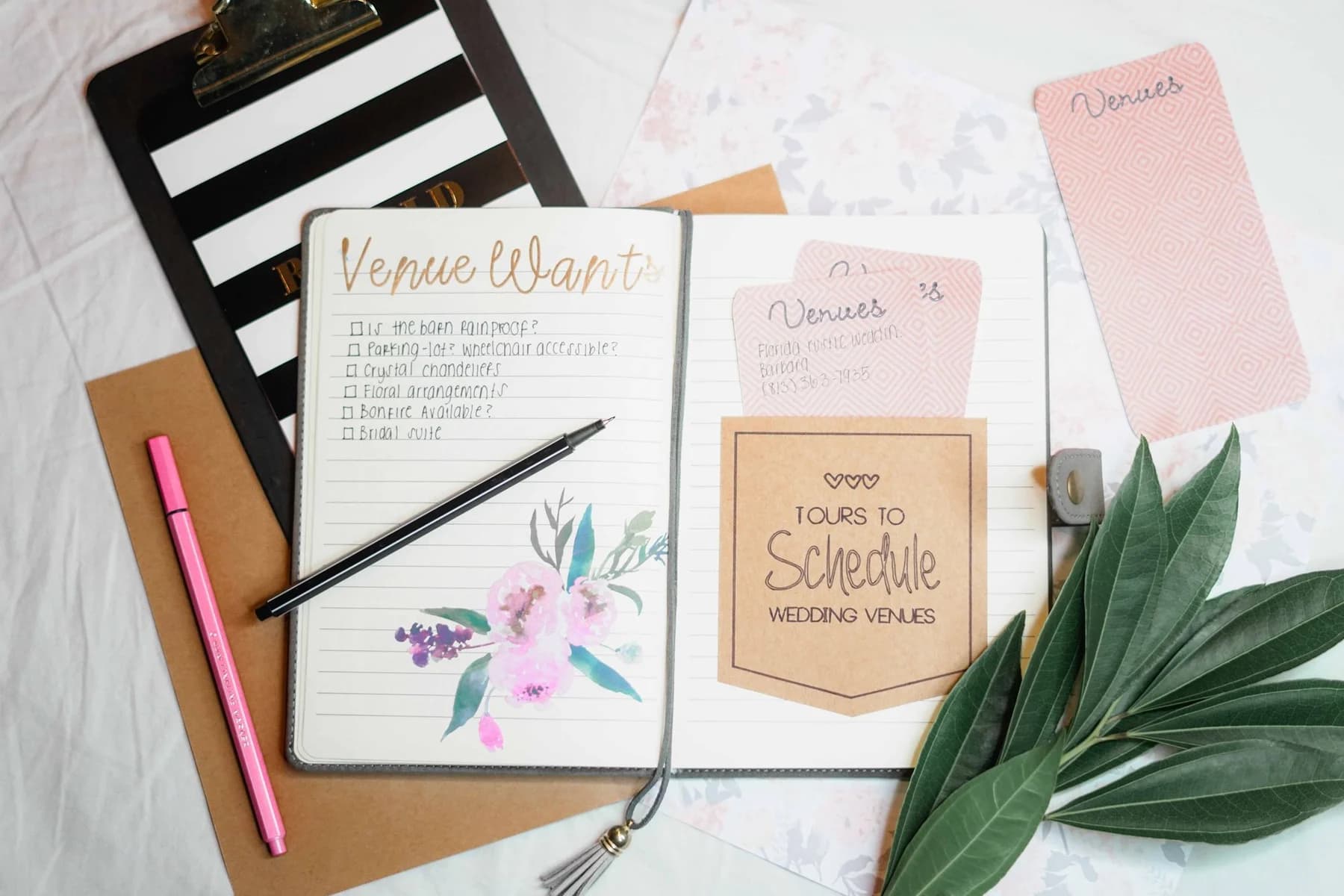
What should you book now for a 2027 wedding? Start with budget, approximate guest count, location and two or three acceptable dates. Then secure the venue, ceremony, photographer or filmmaker and band or DJ. Current planning guides place high-demand venues and photographers roughly 12–18 months ahead for prime weekends.
September 2026 is not automatically too late. It simply means sequence matters more than perfect styling. Sign the contracts that secure date and budget before spending weeks on details that remain flexible.
1. September 2026: the decisions to make now
Agree a maximum budget and keep a 10–15% contingency for price adjustments and forgotten extras. Draft a guest list in definite, preferred and reserve groups; venue options change completely between 80 and 160 guests.
Choose several dates. Flexibility protects your vendor choice, while a fixed date requires flexibility elsewhere. A date is secured only when the contract and required payment are complete.
- Maximum budget and contingency
- Working guest count
- Two or three dates
- Three shared priorities
- One place for contracts and payment dates
2. Set urgency by your 2027 season
A January–April 2027 wedding needs a compressed plan: secure venue, ceremony, music and photography immediately and communicate travel early. May–September Saturdays also need action this autumn.
October–December offers more breathing room, but distinctive venues and suppliers do not fill evenly. Fridays, Sundays and off-season celebrations increase choice, provided they still work for your guests.
- January–April: close core bookings now
- May–September: secure the event team this autumn
- October–December: finish key bookings by early 2027
- Weekdays or Sundays: more availability, different guest logistics
3. 12–18 months out: date, venue and ceremony
The venue unlocks the rest. Check minimum spend, paid headcount, supplier meals, corkage, overtime, accommodation and price-indexation clauses for 2027. Ask when final numbers are due and what happens if the date changes.
Confirm the ceremony separately. Legal, religious and celebrant procedures have local booking windows, so learn the requirements even when formal registration cannot yet be completed.
- Comfortable capacity
- Complete package cost
- Change and cancellation terms
- Weather backup
- Access, exclusivity and noise limits
4. 12–15 months out: photo, film and entertainment
Photographers, filmmakers, bands and DJs usually cover one main wedding per date. Review full galleries or sets, not only social highlights.
Contracts should define hours, team, travel, backups, delivery and publication rights. For entertainment, confirm personnel, substitutes, breaks, equipment, hosting, overtime and any licensing responsibilities.
- Full work from real weddings
- Exact hours and team size
- Travel and overtime
- Illness and equipment backup
- Payment and delivery schedule
5. 9–12 months out: website, save the date and rooms
Once venue and date are signed, launch a wedding website with names, city, date and a note about when full details and RSVP will arrive. Add travel, maps and schedules as decisions are confirmed.
Send save the dates early for holiday periods or travelling guests. Hold accommodation with a clear release date and confirm who pays for unused rooms before guaranteeing a block.
- Live wedding website
- Save the dates for travellers
- Room block and cancellation terms
- Initial transport plan
- One current source for guests
6. 6–9 months out: attire, design and ceremony suppliers
Ordered attire needs production and alterations, so leave a real margin. Bespoke suits also require several appointments, with final fitting closer to the date.
Give florists or designers a budget, table count, venue photos and three priorities. Confirm installation, collection, hire items and seasonal substitutions. This is also a useful window for rings, ceremony music and early menu decisions.
7. 4–6 months out: invitations and RSVP
Set policies for children, plus-ones, rooms and any next-day event before printing. Name everyone whose place is reserved and move longer practical details to the website.
Open RSVP with the invitations and set its deadline before the venue's final-count date. Collect attendance per person, diet, transport, rooms and accessibility needs without asking for information you will not use.
- Named invited party
- Clear reply deadline
- Diet, travel and accessibility
- Fixed capacity per invitation
- A reminder plan
8. 1–3 months out: guests, seating and the day timeline
Close replies, build seating and circulate a working day schedule. Include preparations, travel, ceremony, greetings, meals, first dance, cake, entertainment and return transport, with buffers for delays.
Confirm menu, child seats, supplier meals, rooms and coaches. Order place cards only after attendance is stable and give music suppliers must-play and do-not-play lists.
9. Final week: confirm rather than redesign
Confirm arrival times, addresses, contacts, balances, headcount, dietary needs and the weather plan. Give one coordinator responsibility for supplier calls so they do not reach the couple.
Pack documents, rings, clothing, medication, chargers and scheduled payments. Send guests only genuinely changed information so the essential time and address remain visible.
- One final timeline
- Supplier and coordinator contacts
- Payments and documents
- Weather and delay plan
- Protected rest before the wedding
10. Can you plan a 2027 wedding in 6–9 months?
Yes, with quicker decisions and broader options. Look for venues combining catering, equipment, coordination and accommodation. Consider Friday, Sunday, off-season dates or a smaller guest list, but never compress contract checks.
In the first two weeks, close venue, ceremony, photo and music while launching your website and save the date. Tackle attire, rooms, design and transport in the following month. Fewer separate suppliers make a short plan more resilient.
- Choose bundled services
- Stay flexible on date
- Reduce DIY dependencies
- Compare three vetted offers
- Maintain one live budget and timeline
2027 wedding planning FAQ
Is September 2026 too late for a summer 2027 wedding?
No, but check venues, photography and entertainment immediately and keep several dates available. Do not begin with décor while the date-dependent suppliers remain open.
What should we book first for 2027?
Confirm budget, guest count, date and venue, followed by ceremony, photography or film and music. These decisions secure the date and shape most later costs.
When should 2027 save the dates go out?
Once venue and date are signed, typically 6–12 months ahead. Send earlier when guests need flights, accommodation, holiday leave or international travel.
When should we launch our website and RSVP?
The website can go live as soon as the date is confirmed. Open RSVP with invitations and place the deadline before the venue's final headcount date.
Can we book suppliers before the venue?
You can check availability, but signing several contracts without a confirmed date and location increases the risk of clashes, travel surcharges and lost payments.
Secure the dependencies before the details
Planning a 2027 wedding does not require daily urgency. It requires identifying the few choices that cannot move easily: budget, guest count, date, venue and one-wedding-per-day suppliers.
Keep one source of truth for the couple and another clear source for guests. A live budget, payment schedule and wedding website with RSVP reduce repeated messages and let the celebration grow in a controlled order.